
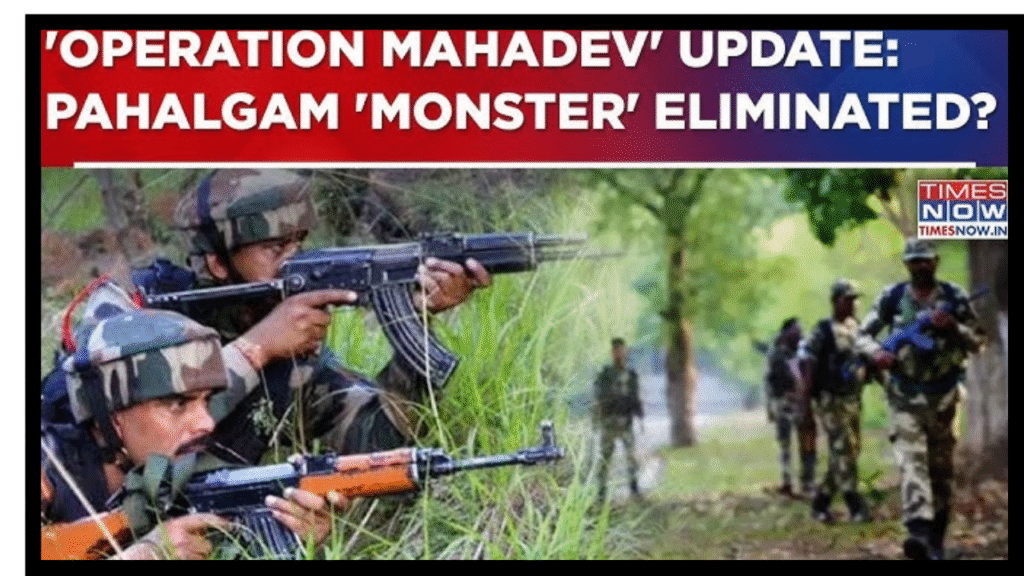
Operation Mahadev: India’s Familiar Game of Bloodshed, Blame, and Boasting in Kashmir
July 29, 2025 | Last Updated: July 29, 2025 | 6-minute readOperation Mahadev:
By Humayun Aziz Sandila
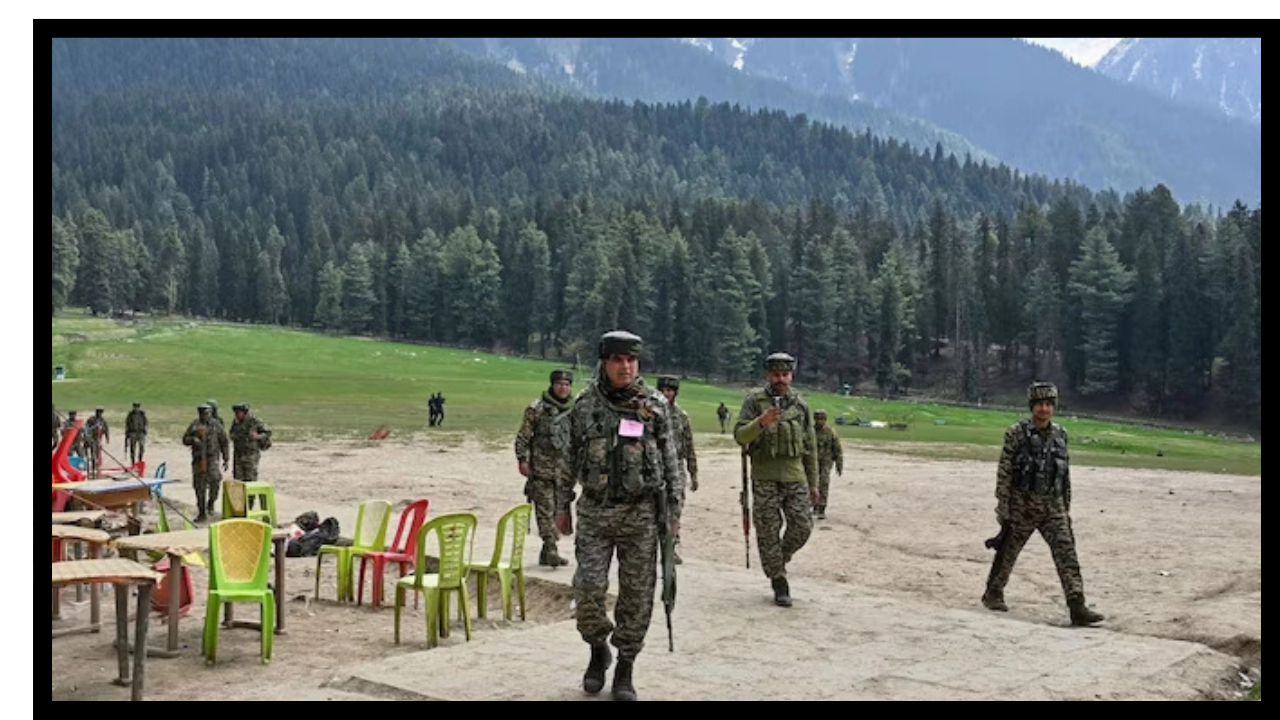

By staging fake encounters and orchestrating propaganda campaigns, the Indian state is steadily undermining its own credibility—both domestically and internationally. After the disgraceful collapse of Operation Sindoor and the false-flag incident in Pahalgam, the launch of Operation Mahadev in India’s Illegally Occupied Jammu and Kashmir (IIOJK) stands as yet New Delhi’s frantic attempt to pass off failure as achievement is yet another.
In its latest maneuver, Indian forces martyred three Kashmiri youths in Srinagar’s Dachigam area during a so-called “cordon and search operation.” The operation, branded as an anti-terror campaign, was jointly carried out by the Indian Army, Central Reserve Police Force (CRPF), and local police. Indian media, toeing the government line, hailed it as a “successful” mission. But behind this dramatic facade lies a deeper, well-worn pattern: staging fake encounters to manufacture a false narrative of national security success.
Much like its predecessors, Operation Mahadev appears to be an effort to cover up military failures by creating an illusion of control. According to credible sources cited by The News, Dawn, and Dunya News, India is reportedly planning to use unlawfully detained Pakistani citizens in staged encounters, falsely labeling them as “cross-border infiltrators.” This strategy seems aimed not just at suppressing the growing indigenous resistance in Kashmir, but also at shoring up the Modi government’s dwindling credibility ahead of upcoming elections.
Related Reads:Operation Mahadev:
Kashmir Flashpoint: Crisis Reignites Amid Rising Tensions – May 27, 2025
Forgotten Rights: America’s Complicity in Kashmir’s Struggle for Self-Determination – January 13, 2025
This isn’t the first time India has employed such chilling tactics. The 2010 Machil fake encounter remains one of the most notorious examples—where Indian soldiers lured three innocent Kashmiri civilians to the Line of Control (LoC) with promises of jobs, then declared them terrorists and executed them with brutality. The killings triggered months of protests across the valley and led to the court-martial of six Indian soldiers. The same pattern repeated in the 2020 Amshipora fake encounter, where three young laborers were murdered by Indian troops, who then placed weapons on their bodies to portray them as terrorists. DNA tests later confirmed that the victims were local civilians. These aren’t isolated incidents, but rather part of a systematic policy enabled by impunity.
The latest operation also comes amid a deepening political crisis in New Delhi. ” The Modi government’s response to the April 22 Pahalgam incident, which claimed 26 lives, was openly attacked by former Indian Home Minister and prominent Congress politician P. Chidambaram. In an interview with The Quint, Chidambaram questioned the government’s lack of openness after Operation Sindoor and its silence on the assailants’ identities. He suggested there had been strategic failures that were later covered up and that the government was deliberately avoiding accountability.
Chidambaram pointedly asked, “Where are the terrorist attackers? Why haven’t you caught them or even identified them?” He also highlighted the government’s failure to update the public on the status of the National Investigation Agency’s (NIA) probe. These might very well be domestic terrorists.Why are you assuming they came from Pakistan? There’s no evidence for that,” he added.
This marks a rare moment of truth from within India’s own political circles. Chidambaram’s remarks sharply expose the baseless and politically motivated allegations India continues to hurl at Pakistan. Notably, Pakistan had offered an independent investigation into the Pahalgam incident, which India outright rejected—further reflecting New Delhi’s aversion to transparency.
In India’s own Parliament, Defense Minister Rajnath Singh claimed that Operation Sindoor had achieved its “desired political-military objectives,” dismissing any notion of external pressure to halt it. However, Congress MP Gaurav Gogoi immediately challenged this claim, accusing the government of failing to explain how such a deadly breach occurred in a heavily militarized zone like Pahalgam. Gogoi also criticized Prime Minister Narendra Modi for not visiting the families of the victims or participating in the parliamentary debate.
The Modi government’s selective communication—delegating fragmented statements to military officials while avoiding clear political answers—has only deepened suspicions. Congress General Secretary Priyanka Gandhi highlighted this ambiguity, pointing to the government’s failure to clearly deny repeated claims by former U.S. President Donald Trump that he had offered to mediate a ceasefire between India and Pakistan. Despite denials from Indian Foreign Minister S. Jaishankar, the lack of transparency persists.
Operation Mahadev